Averonne Research and Consulting

Research-led AI implementation for life sciences, healthcare, and evidence-heavy teams.

Averonne helps teams take one high-friction workflow, assess whether AI is suitable, build the first working system, and hand over a governed process with documentation and human review.

One use case. Feasibility first. MVP or workflow build second. Documentation and handover always.

Life sciences teams Pharma and healthcare workflows Policy and research teams Evidence-heavy knowledge work

When one workflow is too important for vague AI experiments

Use Averonne when your team has a document-heavy, research-heavy, or process-heavy workflow that may benefit from AI, but needs careful scoping, data/source review, human checkpoints, and a governed implementation path.

When teams come to us

→ A workflow is painful but the AI use case is still unclear
→ Documents, data, research, or field inputs need to become decision-ready outputs
→ Teams need repeatable briefs, dashboards, trackers, or internal knowledge systems
→ AI needs documentation, review points, and operating boundaries

What goes wrong without it

→ Generic tools produce outputs that cannot be trusted, repeated, or explained
→ Teams automate unclear workflows and create more review burden
→ Data, source quality, ownership, and approval paths remain undefined
→ Pilots look impressive but fail inside day-to-day operations

How Averonne Helps

01

AI Use-Case Diagnostic

For teams that are unsure where AI actually helps. We examine one proposed use case, map the current workflow, review available data and sources, identify risks, and recommend whether to build, redesign, or stop.

→ Workflow map
→ Use-case prioritisation
→ Data and source readiness
→ Risk, governance, and MVP recommendation
02

Pharma & Healthcare Knowledge Workflows

For teams working with SOPs, policies, research documents, regulatory material, meeting notes, and internal knowledge. We design non-clinical, human-reviewed workflows that make approved information easier to search, summarise, review, and reuse.

→ SOP or policy workflow support
→ Internal document Q&A workflow
→ Medical affairs document workflow
→ Literature or policy monitoring
→ Regulatory intelligence tracker
03

Life Sciences Operations Workflows

For operational teams in pharma, CRO, healthcare consulting, and related environments that need visibility, tracking, summarisation, or implementation support around document-heavy internal processes.

→ Study document readiness tracker
→ Site startup document tracker
→ Labelling-change summary workflow
→ Change-impact summary workflow
→ Internal requirements summary

Designed as workflow support, dashboards, knowledge systems, trackers, and AI-assisted operating processes; not a replacement for clinical, regulatory, legal, medical, or validated-system judgment.

04

Research & Evidence Automation

For policy, research, consulting, health systems, and evidence-led organisations that repeatedly turn raw sources into briefs, reports, synthesis notes, or decision-ready outputs.

→ Evidence brief generator
→ Literature or policy scan workflow
→ Proposal research support
→ Stakeholder interview synthesis
→ Programme dashboard support
05

Governance, Documentation & Handover

Every serious AI workflow needs operating boundaries. Averonne documents how the workflow works, what sources it uses, where humans review outputs, what the system should not be used for, and how the team should maintain it.

→ SOPs and usage notes
→ Human review checkpoints
→ Source and data boundaries
→ Risk notes and known limitations
→ Maintenance and handover checklist

The Averonne Use-Case Delivery Brief

Every engagement ends with a usable output — a feasibility dossier, a working workflow, or a handover pack your team can act on.

Feasibility Dossier

For early-stage use cases

Workflow map AI suitability review Data and source readiness Risk and governance notes MVP roadmap

Implementation Handover Pack

For build engagements

Working workflow summary User instructions Human review points Known limitations Maintenance checklist

What a feasibility dossier looks like

A short, structured read your team can act on. The example below is illustrative only — every dossier is written for your specific workflow.

Feasibility Dossier
Illustrative example · not client work

Turning weekly literature monitoring into a reviewed internal brief

Use case
Summarise a defined set of approved, non-clinical publications into a consistent weekly internal brief for a knowledge team.
Workflow today
Manual and ad hoc; roughly half a day each week; output format varies by author.
AI suitability
Suitable, with human review — summarisation over a fixed, approved source set, not open-ended generation.
Data & sources
Defined list of approved publications. No patient, clinical, or confidential personal data in scope.
Human review
A named reviewer signs off every brief before it is circulated.
Key risks & controls
Source-coverage gaps and unsupported citations — controlled with a fixed source set, citation checks, and reviewer sign-off.
Recommendation
Build MVP — scoped, low-risk, and measurable against the current manual process.
MVP roadmap
1) Source list & review rules · 2) Draft-brief workflow with checks · 3) Reviewer sign-off, documentation, and handover.

Format illustration only. Averonne does not provide clinical, diagnostic, or patient-facing outputs.

Why Averonne

Research discipline before AI build

Most AI pilots fail because the workflow is unclear. We start by defining the question, sources, users, review points, and decision context.

Built for evidence-heavy workflows

We are suited to teams where outputs must be reviewed, challenged, and defended, not just generated.

Human review by design

We do not position AI as a replacement for judgment. We build in human checkpoints, documentation, and clear operating boundaries.

Implementation, not just advice

The engagement does not stop at a strategy deck. Where feasible, we help build the workflow, internal tool, dashboard, or operating process.

Leadership

Averonne combines research depth with implementation oversight so AI workflows are grounded in evidence, context, and accountable delivery.

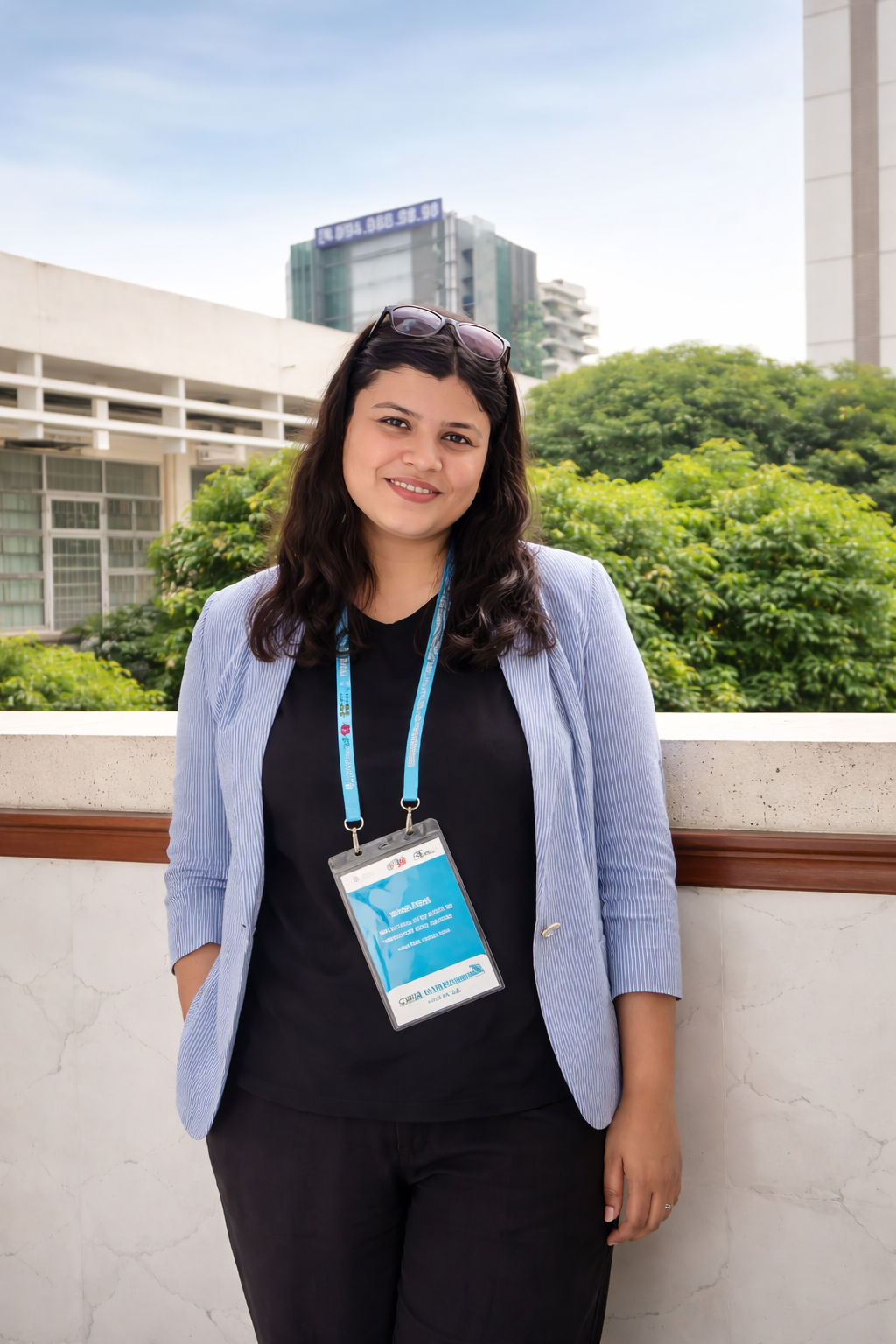
Malka Zehra, Research, Field Evidence and Social Systems Lead

Malka Zehra

Research, Field Evidence & Social Systems Lead
PhD Candidate · Jamia Millia Islamia

Malka Zehra leads engagements where field evidence, stakeholder context, and research design shape the AI or evidence workflow. A doctoral researcher at Jamia Millia Islamia and an MA Gold Medalist, she has delivered fieldwork for international development programmes — including a 350-respondent survey programme at CIMMYT, from instrument design to final report.

Lead responsibility: field evidence, research design, stakeholder context, and social-system interpretation.

Gold Medalist, MA CIMMYT Field Research International Development English · Hindi · Urdu
Mohammed Asif Najar, Culture, Institutions and Context Research Lead

Mohammed Asif Najar

Culture, Institutions & Context Research Lead
PhD Researcher (Final Year) · Jamia Millia Islamia

Mohammed Asif Najar supports engagements needing cultural and institutional context, qualitative analysis, and defensible synthesis. A Senior Research Fellow in the Department of History and Culture at Jamia Millia Islamia, he brings published, peer-reviewed research experience to evidence-led interpretation.

Lead responsibility: institutional context, qualitative interpretation, policy/culture reading, and defensible synthesis.

Culture & Institutions Qualitative Interpretation The Round Table Journal International Conferences
Dr. Mohd Kashif, Historical, Institutional and Evidence Research Lead

Dr. Mohd Kashif

Historical, Institutional & Evidence Research Lead
PhD, History · Jamia Millia Islamia

Dr. Mohd Kashif supports engagements involving historical, institutional, and evidence-review depth. He holds a PhD in History from Jamia Millia Islamia, is an MA Gold Medalist, and held UGC Junior and Senior Research Fellowships. His work has appeared in peer-reviewed journals including Economic and Political Weekly, and he teaches History at the University of Delhi.

Lead responsibility: historical context, institutional analysis, sociopolitical interpretation, and evidence review.

Gold Medalist, MA UGC JRF & SRF Economic & Political Weekly Frontline · Indian Express Hindi · Urdu · English

Advisory & Delivery Support

Strategy & Delivery Advisory

Strategy and delivery support brings consulting-grade scoping, structured problem-solving, AI workflow design, repository/project delivery, dashboard thinking, documentation, and client-facing implementation oversight.

Lead responsibility: use-case diagnostic, AI workflow design, MVP planning, implementation oversight, client scoping, delivery documentation, and governed handover.

Management consultant · IIM & top-tier global firm

Data Science & Analytics

Data and analytics support covers structured data workflows, quantitative analysis, dashboards, AI-assisted analysis patterns, and decision-ready outputs.

Lead responsibility: data workflows, analysis, dashboards, structured outputs, evidence synthesis support, and AI-assisted reporting patterns.

Data & analytics professional · Global consulting & top-tier analytics firm
Field Evidence

CIMMYT: CGIAR-Affiliated International Research Organisation

Designed and ran a digital telephonic survey programme across 350+ respondents in agricultural communities in India — owning the work from survey-instrument design and field-team coordination through data collection, quality assurance, and the final research report.

Delivered to international agricultural research documentation standards.

How We Work

One use case moves from intake to diagnostic, MVP or workflow build, governance, and handover.

01

Use-Case Intake

We start with one workflow, not a broad transformation agenda. You describe the current process, users, data or sources, pain points, and desired output.

02

Diagnostic & Feasibility Review

We assess whether AI is suitable, what data or sources are needed, where human review is required, and whether the use case should be built, redesigned, or stopped.

03

MVP or Workflow Build

If feasible, we build the first working version, such as a dashboard, knowledge workflow, document assistant, research automation process, or internal tool.

04

Governance & Handover

We hand over the workflow with usage notes, operating boundaries, review points, known limitations, and maintenance guidance.

Practical first use cases

These are example starting points, not client case studies. Each begins with one workflow and a feasibility review before any build work.

AI Use-Case Diagnostic Dossier

A structured review of one workflow, including pain points, source readiness, AI suitability, risks, and an MVP roadmap.

Life Sciences Knowledge Workflow

A non-clinical knowledge workflow for approved documents, SOPs, research material, or internal guidance.

Evidence Brief Automation

A research and synthesis workflow that turns approved sources into structured briefs with review controls.

Start Here

Choose the closest starting point for one workflow or use case.

Have a workflow in mind?

Share the use case you want to solve. We will assess whether it is specific, feasible, and worth building.

Submit One Use Case →

Not sure where AI fits?

We can review your workflows and identify one practical, low-risk starting point.

Assess AI Feasibility →

Life sciences or healthcare team?

Start with a non-clinical research, knowledge, operations, evidence, or document-heavy workflow.

Discuss Healthcare Use Case →

Tell us the use case you want to solve

Describe one workflow, research process, document-heavy task, dashboard need, or knowledge process you want to improve. We will review fit and respond with the most practical next step.

Response within 48 hours
All submissions reviewed confidentially
Engagements begin with a free scope review
Research Lead malkaz@averonne.com
General Inquiries headoffice@averonne.com
Location New Delhi, India

Most engagements begin with a short conversation about one workflow. You don't need a finished technical brief — a clear description of the process, sources, and the output you want is enough.

For pharma and healthcare, please describe non-clinical research, evidence, or internal knowledge workflows only. Typical engagements begin within 1–2 weeks of agreeing scope.

Averonne focuses on non-clinical, internal, research, knowledge, and workflow use cases. We do not provide clinical diagnosis, treatment recommendations, patient-facing medical advice, or medical-device AI.

Inquiry Received

We will review your submission and respond within 48 hours.